








Buying a road bike or gravel bike is an exciting adventure. But with so many disciplines, materials, geometries, and drivetrain options, it can sometimes be hard to know where to start. Whether you're looking for pure speed on asphalt, an escape on dirt trails, or an ultra-versatile bike for everyday use, PureBike has been helping you find the perfect ride since 2006, with leading brands like Orbea, Mondraker and Rondo.
1. Road or Gravel: Which Bike Is Right for You?
The first step is to identify your primary riding terrain and riding style:
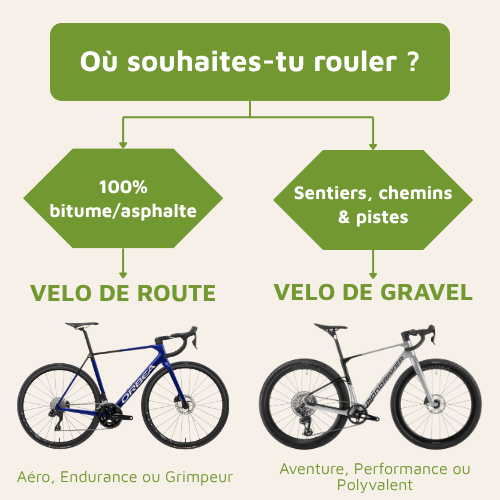
Road Bike: The Pursuit of Efficiency and Speed
Designed to maximize pedaling efficiency on pavement, road bikes feature a stiff frame, narrow tires (25 to 32 mm) from brands like Hutchinson or Schwalbe, and an aerodynamic riding position. They're perfect for riders who love logging miles, climbing mountain passes, or riding in a pack.
Gravel Bike: Unlimited Freedom
A gravel bike is the Swiss Army knife of modern cycling. Combining road bike geometry with the durability and tire clearance of a mountain bike (38 to 50 mm tires, such as the popular Maxxis Rambler or Hutchinson Touareg), it lets you transition seamlessly from asphalt to forest roads, greenways, and rocky trails.
2. The Different Types of Road Bikes
Depending on your body type, flexibility, and performance goals, road bikes fall into three distinct categories:
A. Endurance (or Gran Fondo) Bikes
- Who is it for?
Ideal if you prioritize comfort on long rides, are new to cycling, or want a less demanding position for your back. - Features
Higher head tube, more upright riding position, better vibration damping, and clearance for wider tires. - Top models
Orbea Avant (perfect for beginners in aluminum) or the Orbea Orca configured for an endurance position.
B. Aero / Performance Bikes
- Who is it for?
For riders and racers looking to cut through the air on flat or rolling terrain at high speeds. - Features
Shaped tubes, fully integrated cables, cockpit components from Deda Elementi, and deep-section wheels like Mavic Cosmic or DT Swiss. - Top models
Orbea Orca Aero.
C. Lightweight / Climbing Bikes
- Who is it for?
For riders who love mountain passes, climbing, and sharp accelerations. - Features
Ultra-light carbon frame, high stiffness around the bottom bracket, lightweight clipless pedals from Look Cycle or Time , and lively handling on climbs. - Top models
Orbea Orca.
3. The Different Types of Gravel Bikes
Just like road bikes, gravel bikes have become highly specialized to suit a wide range of uses:
| Gravel Type | Main Use | Tire Width | Key Features | Featured Models |
| Gravel Adventure/Bikepacking | Touring, self-supported rides, rough trails. | 42 mm to 50mm+ (or 650b). | Plenty of mounting points for bags, ultra-stable geometry, ergonomic saddles from Selle Italia or Ergon. | Rondo Bogan, Mondraker Dusty (electric gravel), Orbea Terra H. |
| Gravel Race/Performance | Gravel racing, speed on smooth trails. | 38 mm to 42 mm. | Stiff carbon frame, lightweight carbon wheels from DT Swiss or Mavic, adjustable-geometry fork (TwinTip). | Rondo Ruut, Orbea Terra M. |
| Versatile/Commuting Gravel | Bike commuting during the week, recreational rides on weekends. | 35 mm to 40 mm. | Versatile on roads and trails, fender compatibility, components from BBB or Reverse Components. | Orbea Terra (Aluminum). |
4. Frame Materials: Aluminum, Carbon, or Steel?
Your choice of frame material determines your bike's ride feel, durability, and price:
- Aluminum (Alloy): Affordable, durable, and responsive. It's the perfect material for getting started on a budget (as found on the Orbea Terra H or Rondo Ruut AL series).
- Carbon: Offers significant weight savings, custom-tuned stiffness for better power transfer, and exceptional vibration damping (Orbea Terra M, Rondo Ruut CF).
- Chromoly Steel & Titanium: Premium materials highly prized for gravel adventures (as found on some Rondo models), offering unmatched natural comfort and legendary durability.
5. Drivetrains, Components & Braking
1x or 2x Drivetrain?
- 2x Drivetrain: Preferred for road riding and fast gravel. It offers closely spaced gear ratios with groupsets from Shimano (105, Ultegra) or SRAM.
- 1x Drivetrain: Extremely popular for gravel. Easier to use, lighter, and less prone to dropping the chain, it pairs perfectly with a reinforced chain from KMC or Connex by Wippermann and oval chainrings from Absolute Black or Garbaruk.
Wheels, Tires, and Tubeless: A Winning Combination
Efficiency and comfort on a gravel or road bike depend above all on the wheels and tires:
- Wheels: Choose wheelsets known for their reliability, such as DT Swiss or Mavic.
- Tires & Tubeless Setup: Prevent pinch flats by going tubeless with sealant from Stans NoTubes, Muc-Off, or Monkey Products. If you prefer inner tubes, choose ultra-light polyurethane tubes from Tubolito.
Hydraulic Disc Brakes
Essential for your safety, hydraulic brakes (Shimano, SRAM, or Hope) deliver consistent power, precise modulation, and complete confidence in wet conditions. Keep your brakes in top shape with our bleed kits from Bleedkit and brake pads from Brake Authority or Parts 8.3.
6. How Much Should You Spend on Your New Bike?
- Under €1,500: Ideal for starting bike commuting or touring. Aluminum bikes equipped with reliable drivetrains and durable components.
- Between €1,500 and €3,000: The sweet spot. High-end aluminum frames or entry-level carbon frames (Orbea Terra, Rondo Ruut), hydraulic drivetrains (Shimano GRX / 105, SRAM Apex/Rival), and excellent durability.
- Between €3,000 and €5,500: Entry into high performance. Lightweight carbon frames, electronic groupsets (SRAM AXS, Shimano Di2), DT Swiss or Mavic wheels, and high-precision Black Bearing bearings.
- Over €5,500: The absolute high end. Exceptional builds, minimal weight, power meters, and exceptional electric gravel bikes like the Mondraker Dusty.
7. Finding the Right Size and Fine-Tuning Your Fit
A good riding position is key to avoiding numbness, back pain, and tendinitis.
- Frame size: Usually expressed in cm or standard sizes (S, M, L, XL). Always refer to the manufacturer's size chart (Orbea, Mondraker, Rondo) based on your height and inseam.
- If you're between sizes:
- The smaller size will offer a more aggressive, compact, and responsive riding position.
- The larger size will provide more stability and a higher cockpit for greater comfort.
PureBike Tips to Take It Further
To bring your plans to life and enjoy the best possible ride:
- Browse our selection of new road bikes and gravel bikes from our partner brands (Orbea, Mondraker, Rondo...).
- Upgrade your bike with our road and gravel wheels (DT Swiss, Mavic) and premium tires (Hutchinson, Maxxis, Schwalbe).
- Dial in your riding position down to the millimeter with our idmatch Bikefitting Complete Fit Assessment.
- Maintain your drivetrain and frame with our cleaning and maintenance products from Muc-Off, Monkey Products, and Airshot.
Questions about geometry, drivetrain compatibility, or choosing a size?
Contact the PureBike team to speak with our riding experts!
Contact Us