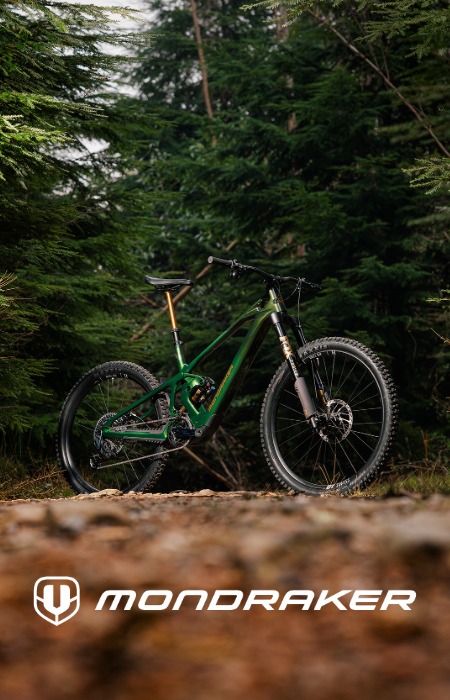
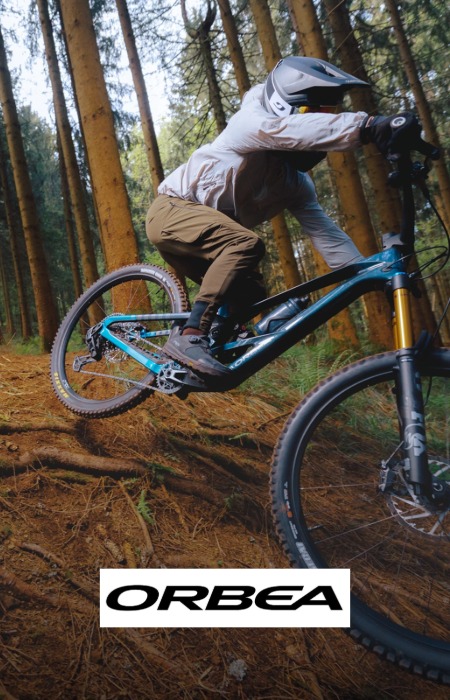
Pilotage engagé d'un rider équipement complet sur VTT Mondraker tout-suspendu en virage serré soulevant de la poussière

Finding the perfect mountain bike has never been easier! Whether you're taking your first rides or looking for a bike to perform on enduro trails, check out our ultimate guide to making the perfect choice.

How to choose the right mountain bike: The complete rider's guide

Buying a mountain bike is an exciting investment, but with so many riding styles, geometries, and technologies to choose from, it can be easy to get overwhelmed. At PureBike, we've been helping you find the right bike for your skill level, favorite trails, and budget since 2006, with top brands like Mondraker, Orbea, Rocky Mountain or Yeti Cycles.

1. Define your riding style: What terrain will you ride?

Before looking at components or the bike's looks, consider the terrain in your area and your riding style.

  • Recreational Riding (Flowing trails, forest roads):
    You're looking for simplicity, reliability, and comfort for casual rides without anything too intense. A fun mountain bike with 100 mm to 120 mm of travel is perfect.
  • Cross-Country / XC (Speed, efficiency, and climbing):
    Your goal is to cover miles and climb efficiently. You need an ultra-light, responsive bike with maximum pedaling efficiency (100 mm to 120 mm), like the XC range from Orbea (Oiz).
  • Trail and All-Mountain (Ultimate versatility and mountain riding):
    You enjoy climbing at your own pace as much as having fun on varied trails downhill. Trail/All-Mountain bikes (130 mm to 150 mm), like the Mondraker Raze, offer the best balance on the market.
  • Enduro and Bike Park (Committed descents and demanding terrain):
    You prioritize technical descents, jumps, and challenging trails. Choose a sturdy frame with plenty of travel (160 mm to 180 mm) and high-performance suspension from Fox Factory or RockShox, like the Mondraker Foxy / SuperFoxy or the Rocky Mountain Altitude.
  • DH / Downhill (Pure speed on challenging trails):
    Designed exclusively for descending (via lifts or shuttles), these bikes feature 200 mm of travel and an ultra-stable geometry.

2. Hardtail or full suspension: the big question

Choosing between a hardtail mountain bike (front suspension only) and a full-suspension mountain bike (front suspension and rear shock) comes down to three key factors:

CriteriaHardtail Mountain BikeFull-Suspension Mountain Bike
Weight & EfficiencyLighter, with direct power transfer when pedaling.Slightly heavier, but with better traction on climbs.
Comfort & GripMore physically demanding on rough terrain.Maximum shock absorption and greater comfort on long rides.
Maintenance & BudgetFewer moving parts, with simple, affordable maintenance.Requires regular suspension maintenance (shock and fork).
Ideal TerrainSmooth, rolling terrain, forest trails, XC.Technical, rocky terrain, rooty woods, mountains.

3. Traditional mountain bike or electric mountain bike (eMTB)?

Electric assist has transformed mountain biking.

  • Traditional Mountain Bike: Ideal for purists, physical training, lightweight handling (jumps, manuals), and tighter budgets.
  • eMTB (Electric Mountain Bike): Perfect for doubling the distance of your rides, tackling more elevation, and leveling the playing field in a group. Leading motor systems like the DJI Avinox MS and M2S, the Bosch Performance CX, or the Shimano EP8 power some of the best models on the market, including the Mondraker Zendit / Crafty, the Orbea Wild / Rise, or the Rocky Mountain Powerplay.

Explore our Electric Mountain Bikes (eMTBs) >

4. What wheel size should you choose: 29-inch, 27.5-inch, or mullet?

Wheel size directly affects your mountain bike's momentum and maneuverability:

  • 29-inch wheels: The most common standard. They offer outstanding rollover capability, excellent speed retention, and great stability.
  • 27.5-inch wheels: More playful and nimble in tight turns, and easier to manual. Perfect for smaller riders or riders with a very playful style.
  • Mullet setup (29" front / 27.5" rear): Very popular for Enduro and eMTBs, this setup combines the rollover capability and grip of a 29" front wheel with the maneuverability and clearance of a 27.5" rear wheel.
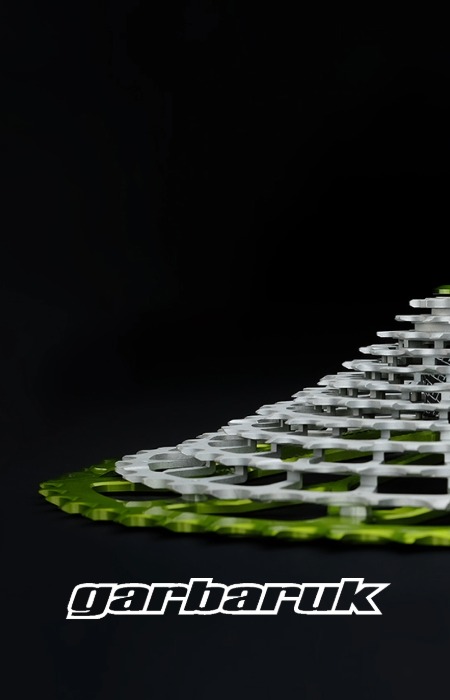
Gros plan sur la transmission VTT monoplateau avec dérailleur arrière SRAM XO Eagle AXS et cassette grand pignon sur roue arrière

5. Frame materials and components: how to build your bike

Aluminum vs. Carbon

Aluminum (Alloy): Durable, forgiving, and more affordable. Ideal for beginners or for riding demanding Enduro trails without worrying about rock impacts.

Carbon: Significantly lighter, with increased stiffness for precise handling and dynamic vibration damping.

Drivetrains and Brakes

Choose a smooth, reliable 12-speed, single-chainring drivetrain: SRAM Eagle / Eagle Transmission (AXS) or Shimano XT / SLX. For reliable stopping power, high-performance 4-piston hydraulic brakes (Hope Tech 4, SRAM Maven / Code, Shimano XT / Saint) are highly recommended as the terrain gets steeper.

6. Understanding geometry: the measurements that transform your ride

Geometry defines how your bike handles. Here are the four key measurements to look at:

Geometry MeasurementDefinition & ImpactHow it rides with a higher valueHow it rides with a lower value
Head angleThe angle of the fork relative to the ground.Slacker (<65°): Maximum stability on fast descents.Steeper (>68°): Maneuverability and responsiveness at low speeds (XC).
ReachThe horizontal distance between the bottom bracket and the head tube.Long (Forward Geometry): Stability and a balanced attack position.Short: A more compact, playful bike that's easy to manual.
Seat tube angleThe angle of the seat tube relative to the ground.Steeper (>76°): Optimal climbing position, prevents the front wheel from lifting.Slacker (<74°): More rearward pedaling position, less efficient on climbs.
Chainstay lengthThe distance between the bottom bracket and rear wheel axle.Long chainstays: Traction and stability on climbs.Short chainstays: Super playful, nimble in turns, and easy to manual.

7. For young riders: how to choose a mountain bike based on age and height

Whether they're just getting started, learning to ride, or joining the family on their first rides, young riders' needs change quickly. Choosing a kids' mountain bike that fits their body is essential for safety, handling, and riding enjoyment. The choice is even easier when you know that Orbea has created an entire range of kids' and teens' mountain bikes called Kimu.

    • Balance bikes (ages 2 to 4 / 85 to 100 cm): The ideal way to gently develop balance and coordination, without the complexity of pedals.
    • 14" to 18" wheels (ages 3 to 7 / 95 to 120 cm): Ideal for first pedal strokes. Choose lightweight bikes with brake levers sized for small hands to help kids feel confident.
    • 20" to 24" wheels (ages 6 to 11 / 115 to 145 cm): The gateway to “real” mountain biking! Gears and disc brakes become available, and some models have basic suspension to help kids try technical trails.
    • 26" to 27.5" wheels for teens (ages 10–12 and up / +140 cm): Modern, lightweight geometry provides a smooth transition to adult mountain bikes, ideal for club rides or more challenging trails.

Golden rule: never buy a mountain bike that's “too big” in the hope that it will last longer. An oversized bike is difficult to control, heavy, and can take the fun out of riding.

PureBike tips to take it further

To bring your plans to life and enjoy the best possible ride:

Need personalized advice for the area where you ride?

Contact the PureBike team to talk with our expert riders!